26 Days

Three Peaks Expedition | Mera, Island & Lobuche East via Amphu Lapcha

Price per person $5390
Altitude 6476m
Difficulty Challenging
Group size 2-10
Climb Style Normal

Overview

This expedition is a comprehensive high-altitude mountaineering journey that combines the ascent of three iconic 6,000-meter Himalayan peaksMera Peak (6,474 m), Island Peak (6,189 m), and Lobuche East (6,119 m)—with the crossing of two of Nepal’s most dramatic high mountain passes: Amphu Lapcha Pass (5,845 m) and Khongma La Pass (5,535 m).

Designed for experienced high-altitude trekkers transitioning into mountaineering, this expedition offers a progressive learning curve across different alpine terrains. Climbers develop skills gradually—starting with the glaciated slopes of Mera Peak, advancing to the steeper headwall of Island Peak, and culminating on the exposed summit ridge of Lobuche East.

Beyond the summits, the route itself is a defining feature. Traversing the remote Hinku Valley, crossing into the Imja and Khumbu valleys, and tackling Amphu Lapcha and Khongma La transforms this journey into a true expedition-style traverse rather than a single-peak climb. The combination of altitude, terrain variety, and sustained effort makes this one of the most complete 6,000-meter mountaineering experiences in Nepal.

This is not simply about ticking off summits. It is about endurance, adaptation, skill development, and decision-making—the same qualities required for higher Himalayan objectives.


The Three Peaks

Mera Peak (6,474 m)

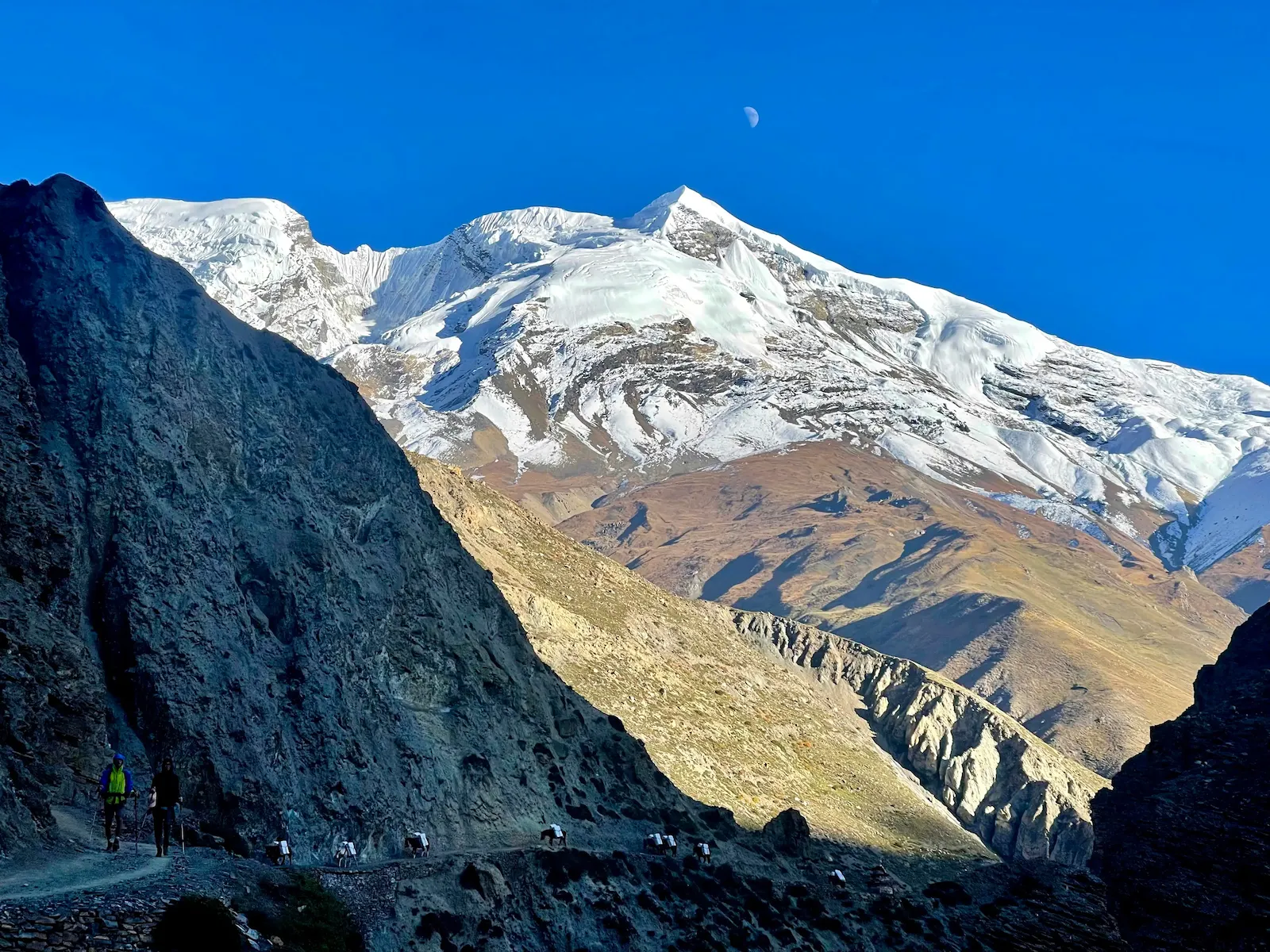
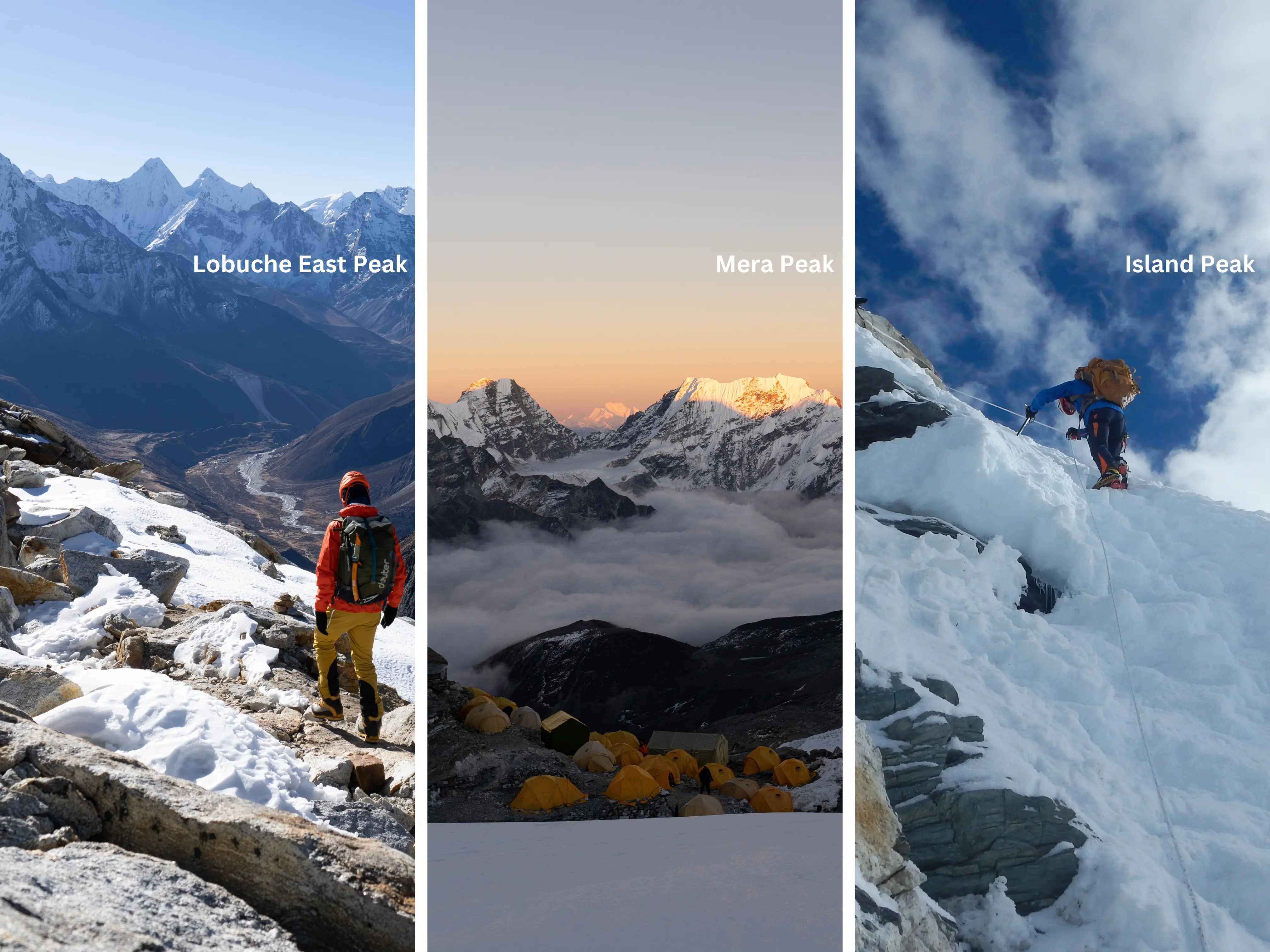
Mera Peak is Nepal’s highest trekking peak and serves as the ideal first summit in this expedition. Reached via the remote Hinku Valley, it introduces climbers to glacier travel, high camps, and sustained altitude without extreme technical difficulty. The summit offers a legendary panorama of Everest, Lhotse, Makalu, Cho Oyu, and Kanchenjunga.


Island Peak / Imja Tse (6,189 m)

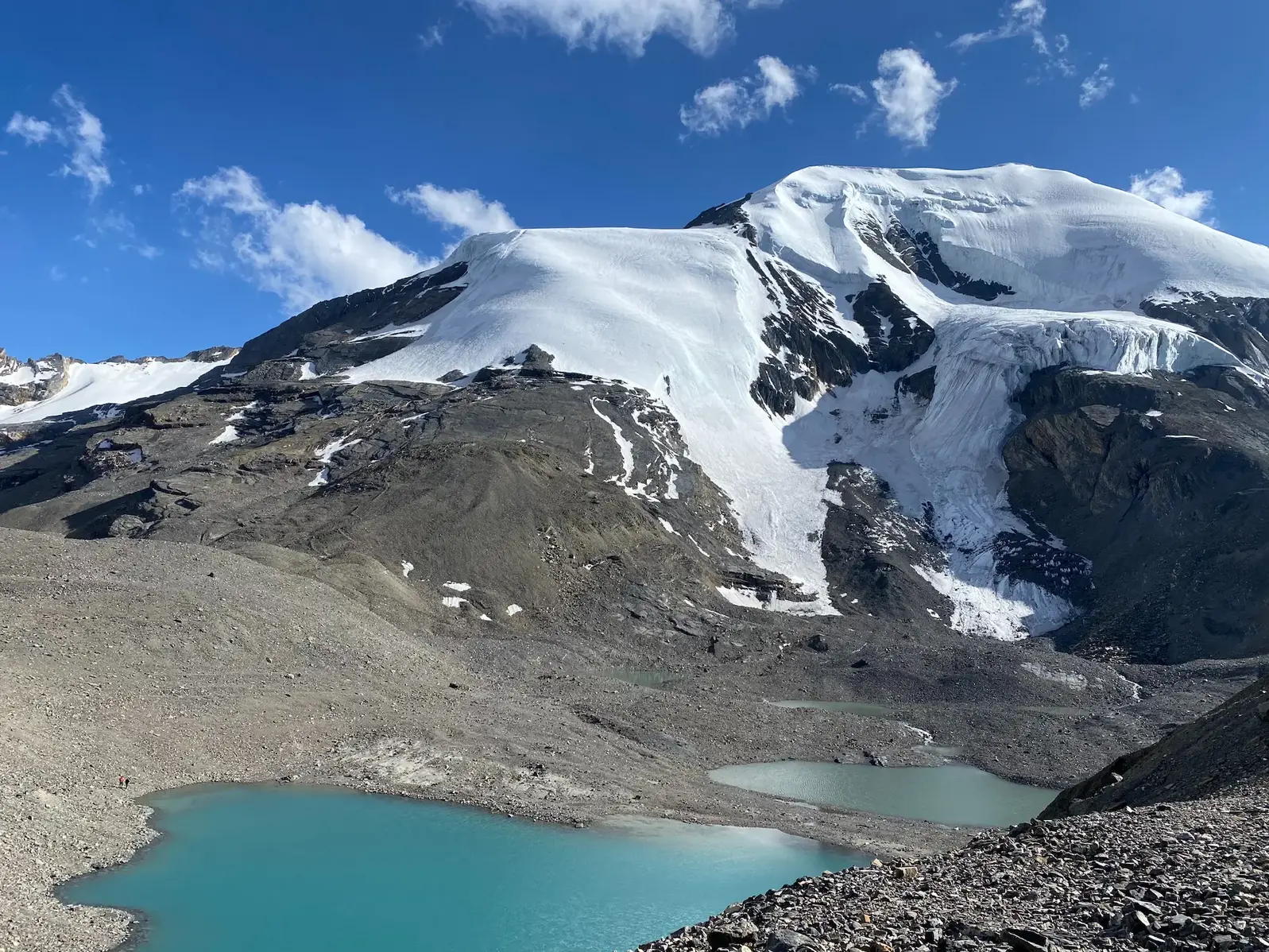
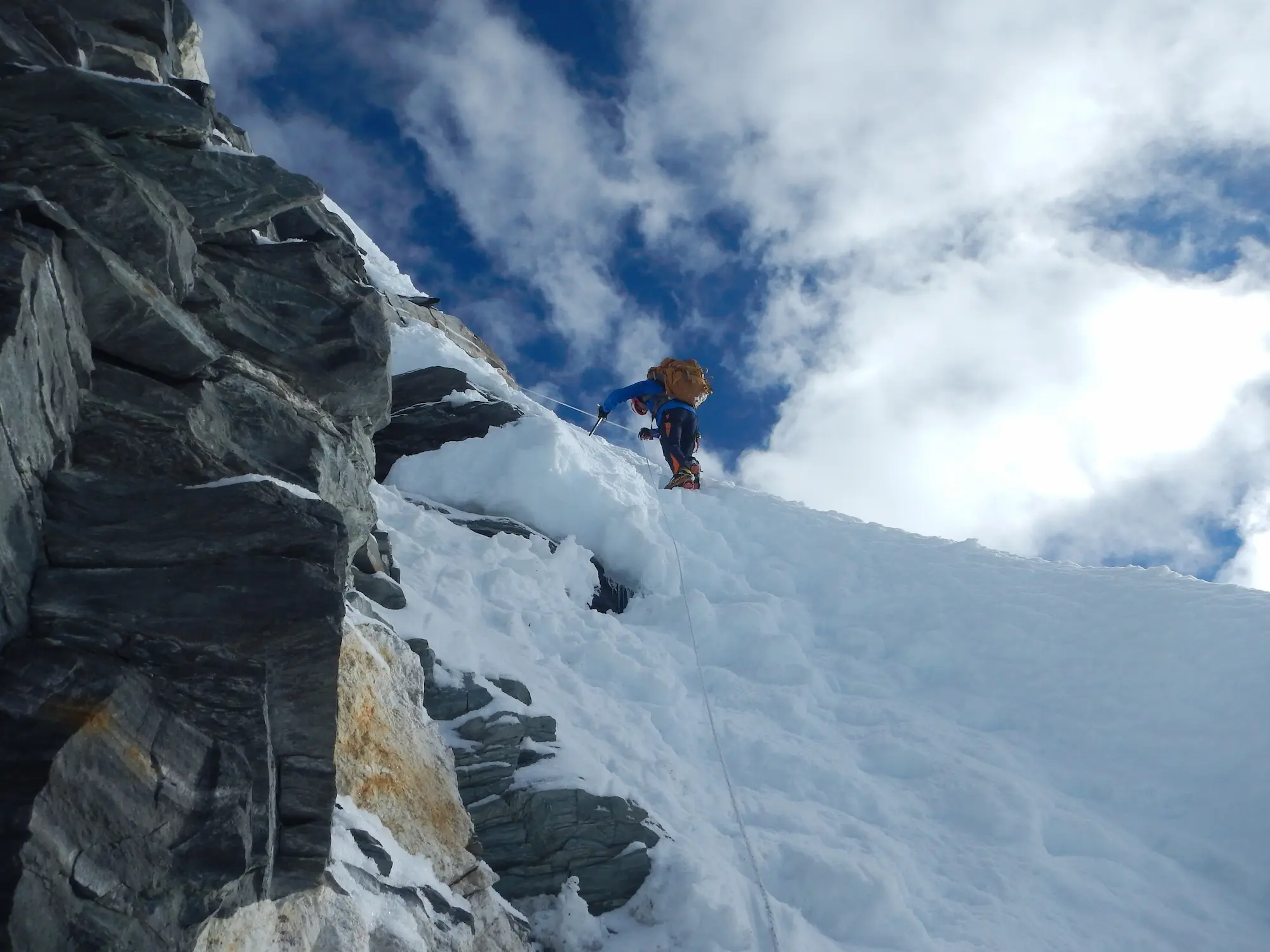
Island Peak adds technical progression to the journey. The ascent involves fixed ropes, a steeper headwall, and a narrow summit ridge rising above the Lhotse Glacier. From the summit, climbers enjoy close-range views of Lhotse, Nuptse, Ama Dablam, Makalu, and Baruntse.


Lobuche East (6,119 m)

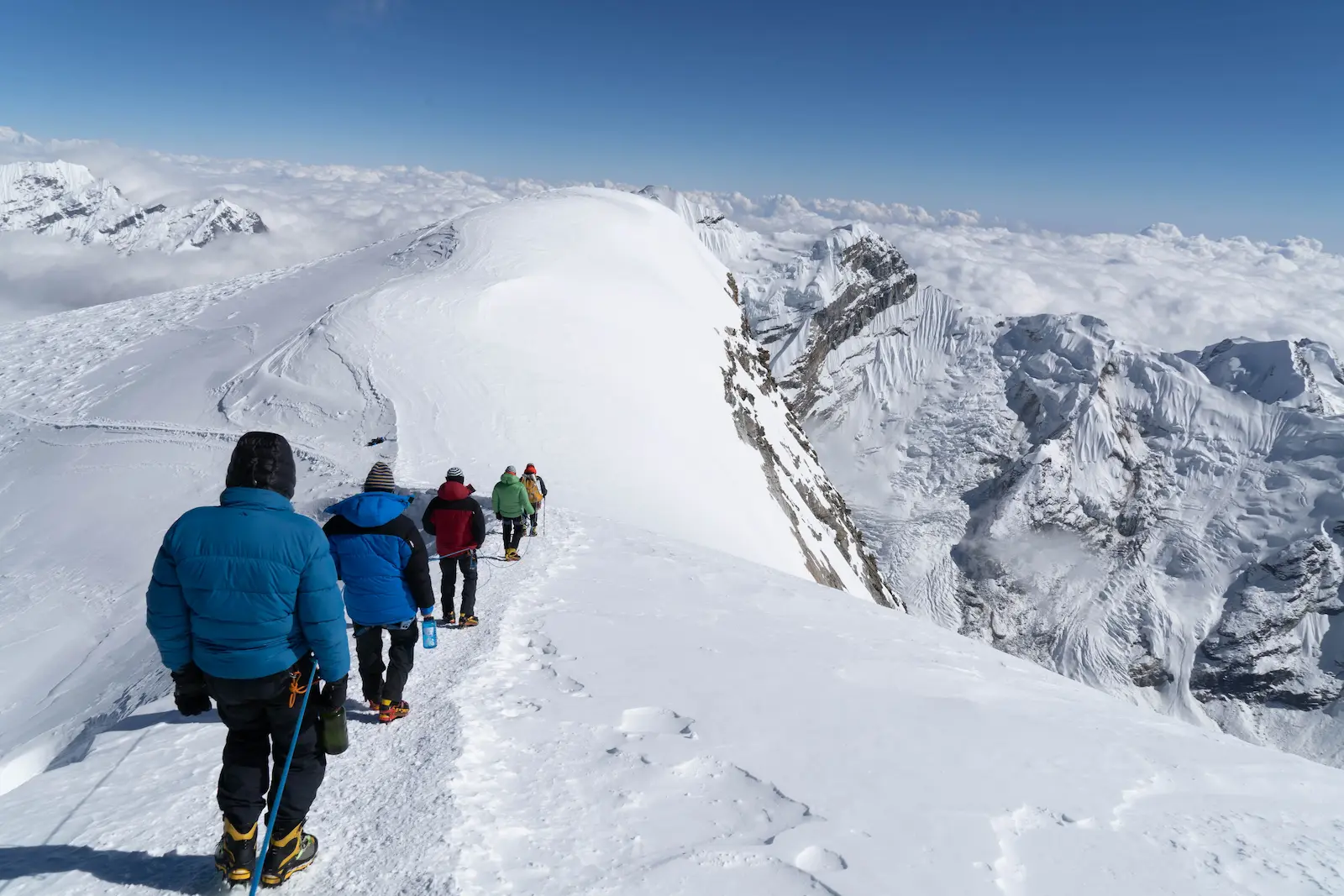
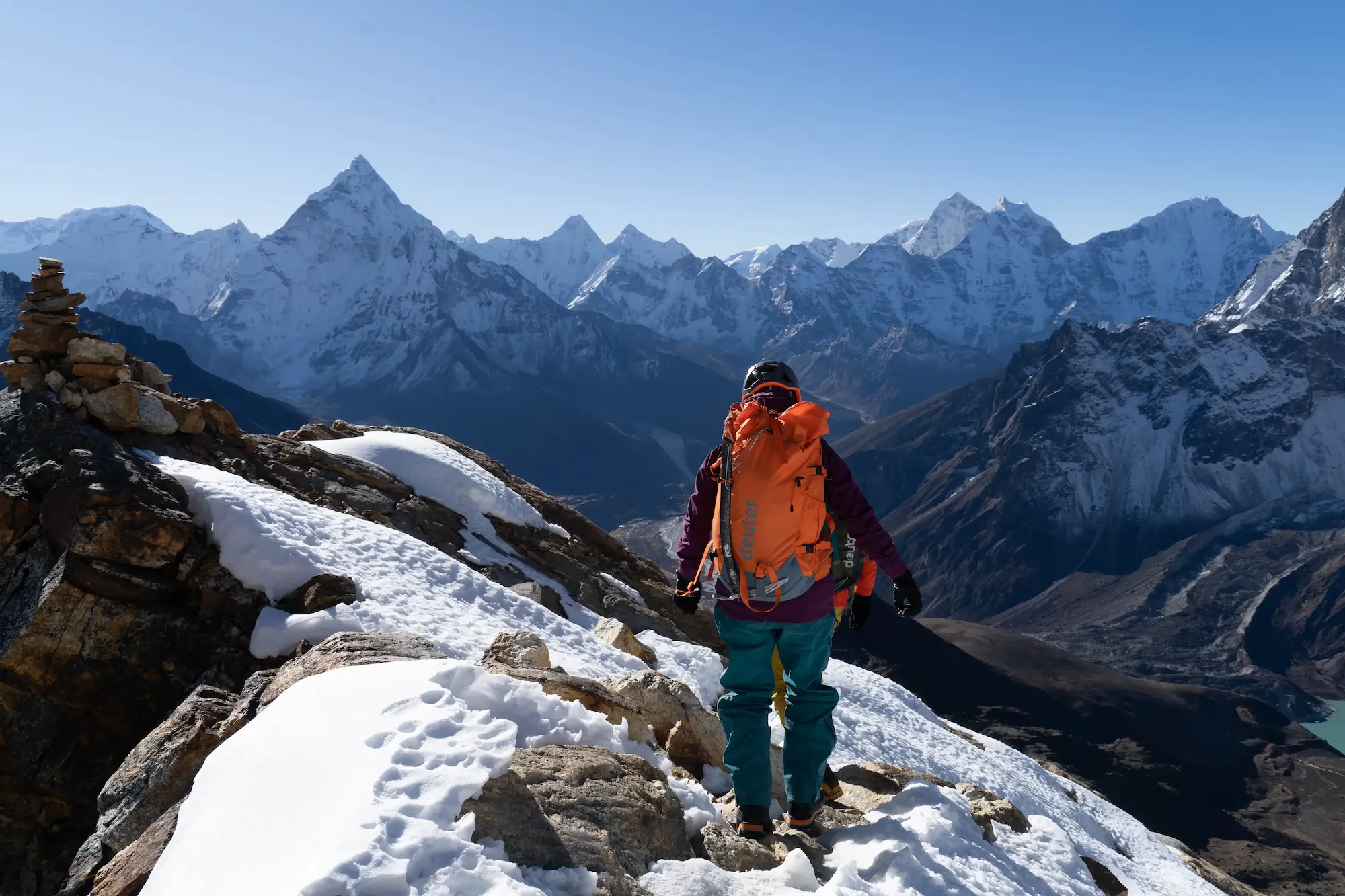
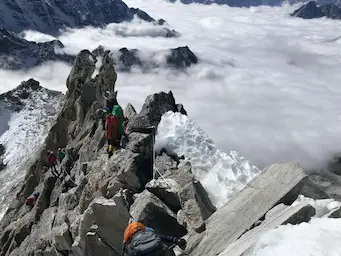
Lobuche East completes the trilogy with an exposed alpine summit above the Khumbu Glacier. The final ridge demands confidence on snow, ice, and fixed lines, rewarding climbers with sweeping views of Everest, Lhotse, Nuptse, Pumori, and Ama Dablam.


High Pass Crossings

  • Amphu Lapcha Pass (5,845 m):
    One of Nepal’s most technical and dramatic high passes, involving glacier travel, fixed ropes, and steep descent into the Imja Valley.
  • Khongma La Pass (5,535 m):
    A demanding high-altitude crossing that connects the Imja Valley with the Khumbu region, offering vast alpine views and a true expedition feel.

These crossings turn the itinerary into a continuous alpine traverse, not a loop trek.
 

Itinerary

Day 1

Arrive in Kathmandu, the capital of Nepal. Transfer to your hotel and rest after the journey. In the evening, attend a welcome dinner and expedition briefing.

Day 2

Attend a comprehensive trip briefing and expedition preparation session covering the itinerary, logistics, safety guidelines, and final arrangements. This ensures a smooth and well-organized journey ahead.

Following the briefing, enjoy a relaxed city walk focused on local cultural experiences, exploring traditional streets, markets, and everyday life. This gentle introduction offers meaningful cultural insight while allowing time to acclimatize, unwind, and connect with the destination before the journey begins.

Day 3

Drive from Kathmandu to Manthali, approximately a 4-hour journey. Afterward, take a flight to Lukla. Upon arrival, begin your trek to Chutanga, which takes about 3-4 hours.

Day 4

Trek from Chutanga to Thulo Kharka, passing through the Zetrala Pass at 4,600 meters. The trek takes 6-7 hours, offering beautiful mountain views along the way.

Day 5

Trek from Thulo Kharka to Kothe, which will take about 5-6 hours, descending into a beautiful valley surrounded by towering peaks.

Day 6

Begin the trek from Kothe to Thangnag, which takes 4-5 hours. This day offers spectacular views and the opportunity to adjust to the altitude.

Day 7

A rest day in Thangnag for acclimatization. Engage in short hikes to help adjust to the altitude and prepare for the upcoming trek.

Day 8

Trek from Thangnag to Khare, which will take 3-5 hours. This is a scenic part of the trek, with views of the surrounding peaks.

Day 9

Another rest day in Khare to acclimatize further. You’ll also undergo pre-training to prepare for the summit push.

Day 10

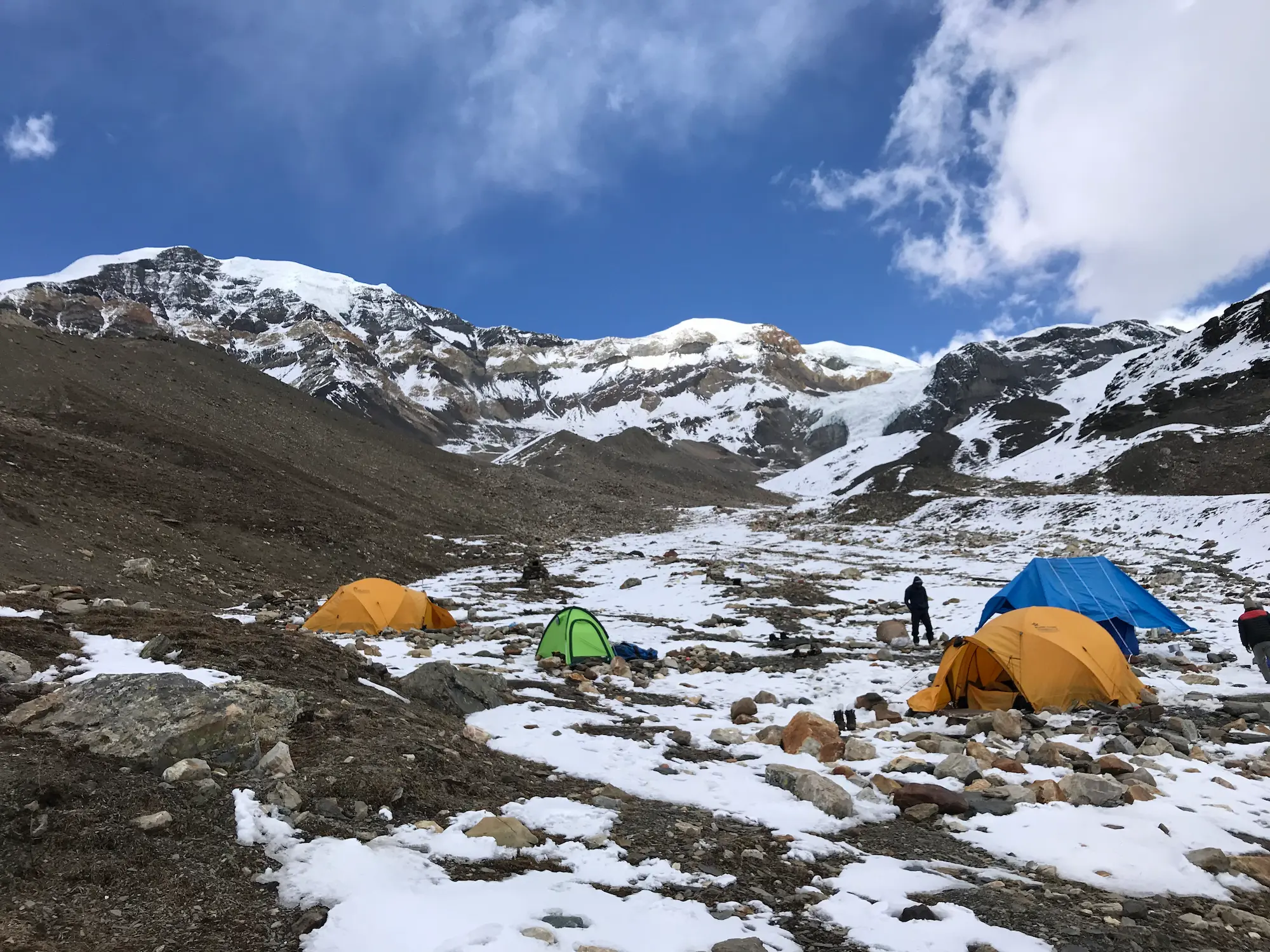
Trek from Khare to Mera High Camp, which takes 6-7 hours. The trek becomes more challenging as you gain altitude, but the views make it all worthwhile.

Day 11

An intense day, beginning with an early start to reach the summit of Mera Peak. After summiting, descend back to Kongma Dingma, taking 10-12 hours in total.

Day 12

Trek from Kongma Dingma to Seto Pokhari in 5-6 hours. Enjoy the peaceful surroundings as you continue your journey.

Day 13

Trek from Seto Pokhari to Amphu Lapcha Base Camp, which takes 5-6 hours.

Day 14

Trek from Amphu Lapcha Base Camp over the Amphu Lapcha Pass to Chukung, which will take 8-9 hours. The pass offers spectacular views and a real sense of adventure.

Day 15

A relatively shorter day with a 3-hour trek from Chukung to Island Peak Base Camp, where you’ll rest for the night.

Day 16

A challenging day, climbing from Island Peak Base Camp to the summit at 6,189 meters. After summiting, descend back to Chukung, taking 10-12 hours in total.

Day 17

Take a full rest day in Chukung to recover from the previous climbs and prepare for the next stages of the trek.

Day 18

Trek from Chukung to Lobuche via Kongma-la Pass, which will take 7-8 hours. This day offers great views of the Khumbu region.

Day 19

A 3-4 hour trek from Lobuche to Lobuche High Camp, where you’ll prepare for the next phase of the expedition.

Day 20

Climb from Lobuche High Camp to the summit of Lobuche East (6,119 m), then descend back to High Camp. Expect a 9-10 hour day.

Day 21

Trek for 5 hours from Lobuche High Camp to Pangboche, enjoying views of the surrounding mountains.

Day 22

Trek for 5 hours from Pangboche to Namche Bazaar, a bustling market town in the Khumbu region.

Day 23

Trek from Namche Bazaar to Lukla, which takes 6-7 hours.

Day 24

A 20-minute flight from Lukla to Manthali, followed by a 4-hour drive back to Kathmandu.

Day 25

njoy a thoughtfully curated wellness experience designed to restore body and mind while connecting with local culture. The program includes guided yoga and breathing sessions, sound healing for deep relaxation, and a therapeutic massage to ease travel or trekking fatigue.

Complementing the wellness activities, take part in authentic local experiences, including a hands-on cultural or cooking workshop that offers meaningful interaction with local traditions and everyday life.

The day concludes with a farewell cultural dinner, featuring traditional cuisine, live music, and cultural performances—providing a refined and memorable ending to the journey that blends wellness, culture, and celebration.

 
Day 26

Transfer to Tribhuvan International Airport for your departure flight, marking the end of your memorable expedition in the Everest region.

Cost Inclusion & Exclusion

Pick-up and Drop-Off Services: Assistance is provided for both international and domestic flights as per the itinerary. 

Accommodation: four nights stay in Kathmandu hotels on a bed and breakfast basis, including two nights before and one night after the expedition. 

Domestic Flights: Roundtrip domestic flights from Kathmandu to Lukla, accompanied by a guide. 

Transportation: All necessary transportation arrangements for the entire expedition. 

Permits and Fees: Mera, Island, Lobuche East Peak climbing permit, along with all necessary permits, National Park Fees, and Rural Municipality fees. 

Route Fixing: Charges for fixing the summit route. 

Garbage Disposal: Fees for garbage disposal and management. 

Meals: Three meals a day (Breakfast, Lunch, Dinner) during the trek 

Climbing Support: Provision of a professional Climbing Guide with equipment allowance, daily wages, and carrying bonus. 

Base Camp Staff: Base Camp Cook, and Kitchen helpers with their equipment allowance and daily wages.

 ∙ Porters: Porters provide all-round trips. 

Baggage Allowance: 10 kilograms for check-in and 5 kilograms for carry-on.

 ∙ High Camp Services: Provision of High Camp services including high tents, and high food items. 

Emergency Services: Availability of satellite phones for emergency use at $3 per minute. Oxygen and Mask regulators are available, in case of emergencies (chargeable as per use). 

Insurance: Helicopter rescue insurance for outdoor staff such as Climbing Guides and porters.

 ∙ Equipment: Provision of Climb Himalayas Duffel Bags if required. First Aid medical kit carried by the guide to Base Camp. 

Cultural Events: Welcome/Farewell dinner with expedition staff in a Nepali typical restaurant with a cultural show in Kathmandu. 

Taxes: Government taxes and company service charges. 

Certificates: Mera, Island, and Lobuche East summit certificates awarded after the successful summit of the peak.

International Flights: Cost of international flight tickets to and from your country. 

Visa Fees: The Nepal Entry visa fee is obtainable at the airport upon arrival.

 ∙ Meals: Lunch and Dinner expenses during the stay in Kathmandu. 

Extended Stay: Additional charges for an extended stay in the hotel after the initial four nights in Kathmandu. 

Personal Expenses: Expenses related to personal climbing equipment, as well as personal nature expenses such as beverages, laundry, postage, telephone, Wi-Fi, etc. 

Excess Baggage: Extra costs incurred due to personal member’s baggage exceeding the weight mentioned in includes. 

Insurance: Travel, accident, medical, and emergency evacuation insurance during the Lobuche East Climbing. 

Filming Charges: Charges for commercial filming and drone permits if needed, including drone and special filming permits. 

Tips: Climbing Guide summit bonus and tips for base camp staff and porters.

 ∙ Extra Expenses: Any other additional expenses not mentioned in the Cost Includes section. 

Travel Notes

Key Highlights

  • Summits of three 6,000m peaks in one continuous expedition
  • Crossing two major technical high passes
  • Remote trekking through Hinku Valley, Imja Valley, and Khumbu
  • Extensive exposure to glacier travel, snow slopes, and fixed ropes
  • Exceptional views of five 8,000m peaks
  • Deep cultural immersion in Sherpa villages and monasteries
  • High-camp experience across multiple alpine environments
  • A structured progression ideal for climbers planning Ama Dablam, 7,000m, or 8,000m objectives

Route & Terrain Characteristics

  • Long trekking approaches with gradual altitude gain
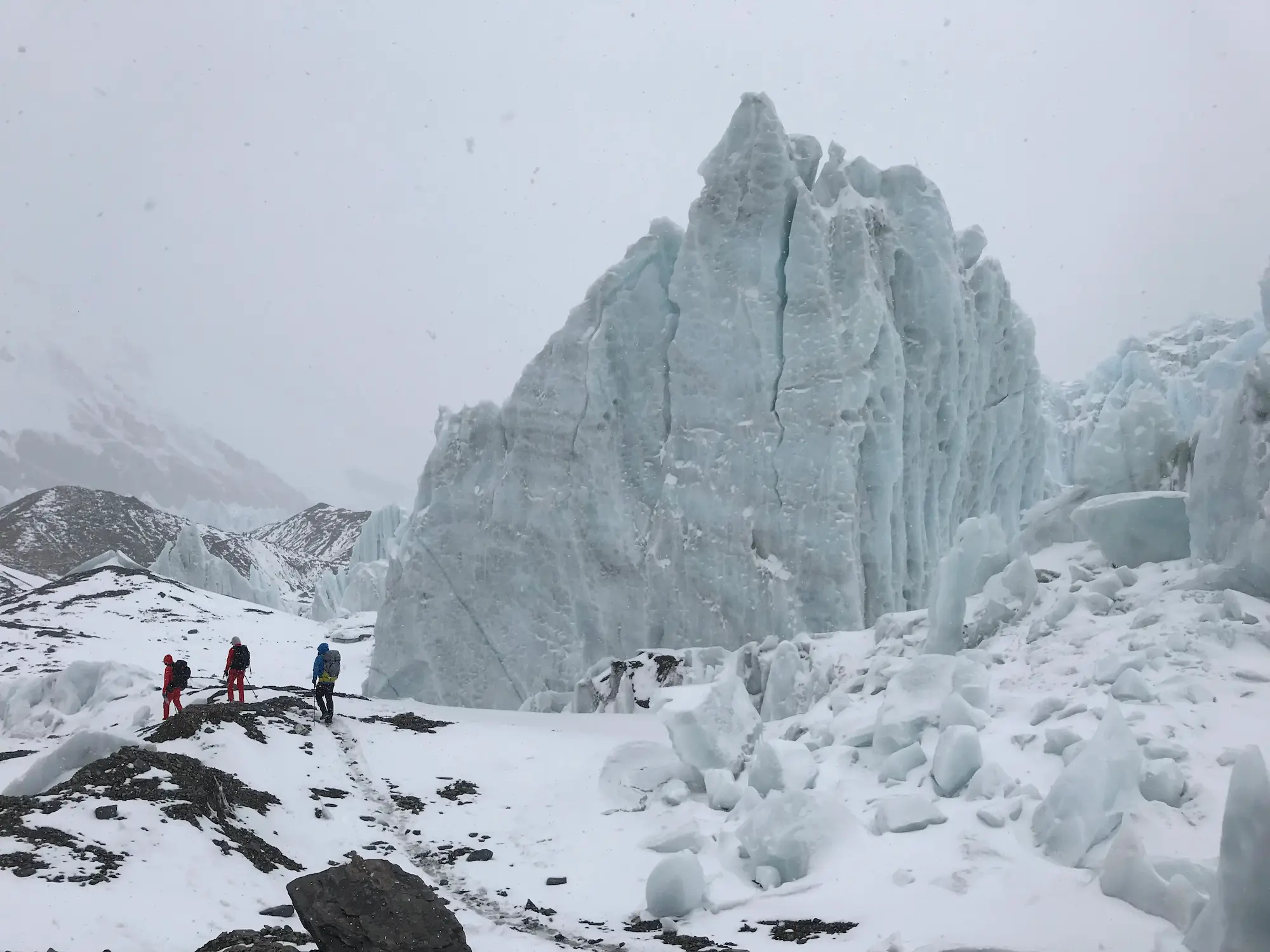
  • Glacier crossings and crevasse awareness
  • Snow and ice climbing sections
  • Fixed ropes on steeper headwalls and passes
  • Multiple summit days requiring endurance and pacing

This expedition is physically and mentally demanding, even though no single peak is extreme in isolation.


Preparation & Experience Requirements

  • Prior trekking experience above 4,000 m is essential
  • Strong cardiovascular fitness and leg endurance
  • Basic mountaineering skills (crampons, ice axe, rope travel)
  • Ability to sustain effort over multiple summit attempts
  • Commitment to acclimatization and recovery days
  • Mental resilience for weather delays, cold, and exposure
  • Comprehensive insurance covering climbing above 6,000 m and helicopter evacuation

FAQs

No FAQs available

Book your adventure today

Similar Adventure Packages